Introduction Of Artificial Intelligence
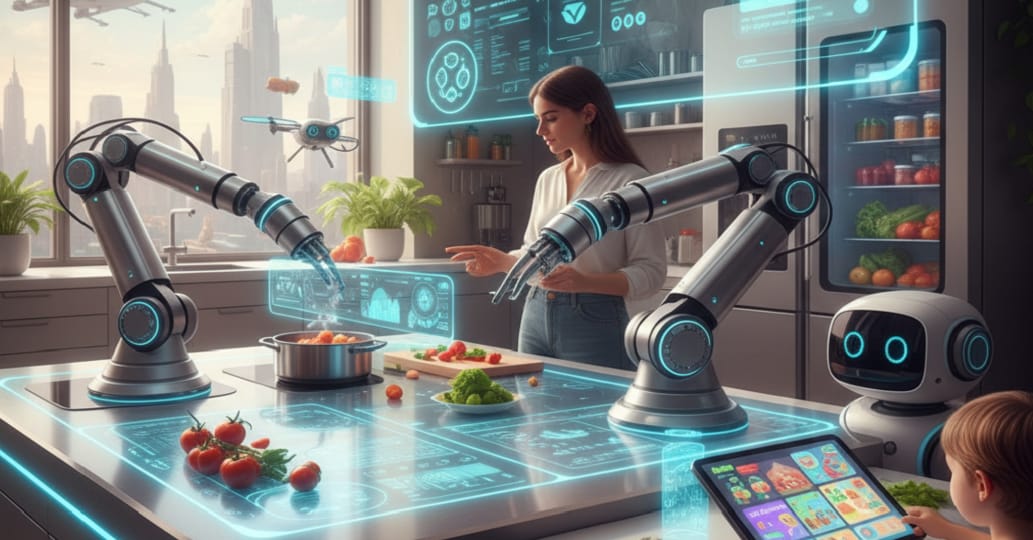
People often refer to artificial intelligence (AI) as a normal component of our daily life. From looking at the weather on our phones to using clever devices at home, artificial intelligence AI in daily life. Lots of people never give attention to how frequently they engage with artificial intelligence tools. Still, they are influencing smart homes, education, healthcare, and practically every contemporary sector.
Using simple English, a pleasant tone, and clear examples, this essay investigates how artificial intelligence is transforming the environment around us such that everyone—children, teenagers, and adults—can grasp it. “AI in daily life” on our website lets readers learn how these technologies operate and how they simplify everyday life.
Let’s explore the amazing world of daily artificial intelligence!
Knowing how artificial intelligence is changing daily life
Over the last ten years, artificial intelligence has developed rapidly. AI is now ubiquitous; once it was only used in research facilities. It drives cars, schools, hospitals, phones, and even kitchen tools today.
The main reason AI is ubiquitous is quite straightforward: it learns from data, much like people learn from experience. Also, since the world generates vast volumes of data daily, artificial intelligence may develop more quickly and more intelligently.
What Is Driving the Power of Artificial Intelligence Today?
Three primary elements have made artificial intelligence quite valuable:
1.Improved Technology
Faster computers enhance the strength and efficiency of artificial intelligence.
2.More Information
Artificial intelligence (AI) enhances its accuracy by continuously producing fresh information from social media, phones, and internet services.
3.Improved Algorithms
New methods of teaching artificial intelligence enable computers to handle challenging tasks, occasionally better than people.
These advancements let artificial intelligence (AI) systems influence sectors like healthcare, education, and smart homes.
Everyday AI Uses Transforming Our Life
Artificial intelligence is part of our daily life, not only something seen in laboratories or large corporations. Unconsciously, you most likely interact with artificial intelligence several times every day.
Personal and mobile devices with artificial intelligence
These are some illustrations of daily artificial intelligence applications:
- Face recognition upon phone unlocking
- Siri, Google Assistant, and Alexa are among the voice assistants
- Camera improvements that automatically change illumination and colors
- Intelligent keyboard suggestions predict the following word you are typing.
Smartphones become more useful and clever thanks to these applications.
Artificial intelligence in online services and social media
Behind AI as well:
- Recommendations of songs and films personally tailored
- feeds on social media
- Email spam detection
- Instruments of translation
- Search results on engine
For instance, YouTube uses artificial intelligence to suggest videos according to your past viewing behavior. Netflix treats movies and TV shows similarly, thereby customizing entertainment.
READ ALSO :Emerging Tech Trends 2025: The Future of Technology and Innovation
How artificial intelligence is changing healthcare
Healthcare is one of the most affected aspects of daily life by artificial intelligence. Artificial intelligence applications in this area improve the effectiveness of medical care, lower mistakes, and save lives.
Early Detection Using Artificial Intelligence
Medical images that artificial intelligence can examine include:
- X – rays
- Computed tomography scans
- MRI outcomes
AI can occasionally identify diseases more quickly and reliably than human doctors. AI solutions, for instance, can spot early indicators of cancer that the human eye might not be able to see.
Medical Tools Powered by Artificial Intelligence
Using artificial intelligence, smart medical devices track health in real time. These include:
- Smartwatches spotting erratic heartbeats
- Diabetic patients’ blood sugar meters
- Sensors monitoring sleep patterns
This enables patients to control their health at home and helps doctors to make better decisions.
Virtual Health Assistants
AI virtual assistants and chatbots support:
- Respond to fundamental medical inquiries.
- Patients should be reminded to take their pills.
- Offer mental health assistance.
Particularly for people living in rural regions, these tools help to increase access to medical care.
Should you want more health-related artificial intelligence information, investigate confirmed articles at groups like the World Health Organization (WHO).
AI’s Future in Education
AI is also revolutionizing other sectors including education. Whether pupils study online or in a regular classroom, artificial intelligence enables a more tailored experience.
Individualized Learning Tools
AI can modify lessons according to:
- The speed of student learning
- Advantages and disadvantages
- Preferred method of learning
This implies each student receives a path suited exactly for their needs.
Artificial Intelligence for Teachers and Schools
AI helps teachers save time by:
- Automated Grading
- Creating lesson plans
- Keeping tabs on how students are doing
- Identifying early learning difficulties
Teachers may concentrate more on teaching since chores get less difficult.
Smarter platforms for online learning
AI is used on sites like Duolingo and Khan Academy to:
- Provide immediate comments.
- Suggest some activities.
- Track development.
This enables internet learning to be more efficient and fun.
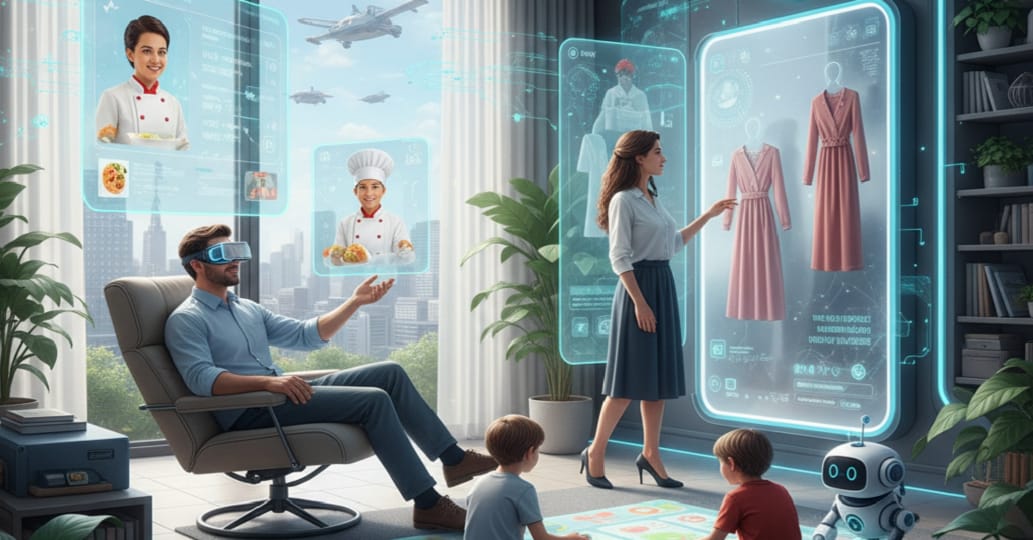
Clever Homes: AI’s Contribution to Simplification of Life
AI helps smart homes save energy, make life safer, and simplify routine activities.
intelligent aides
AI is used by smart speakers like Alexa or Google Home to:
- Regulate lights
- Address queries
- Play some tunes.
- Program schedule reminders.
- Shut doors.
They transform your house into a useful buddy rather than a structure.
Intelligent Security Solutions
AI-powered security cameras have the capacity to:
- Sensed movement
- Identify faces
- Send alarms.
Some systems can distinguish a pet from a person, so lowering false alarms.
Intelligent Appliances
AI is applied in modern devices to boost effectiveness. Some instances are:
- Refrigerators monitoring food expiration
- Washing machines picking their finest cycle
- Thermostats changing to fit your preferred temperatures
These programs illustrate how everyday uses of artificial intelligence can save time, money, and energy.
Advantages of AI in Current Society
There are several benefits of artificial intelligence:
1.Faster decision-making process
2.More effectiveness
3.More accuracy
4.Reduced Expenses
5.Better safety
From individualized healthcare treatments to safer homes, artificial intelligence simplifies and secures life.

READ ALSO :The Rise of Digital License Plates: How They’re Changing the Future of Driving
Difficulties and Ethical Questions
AI has some good things about it, but it also makes people worried:
1.Information privacy
2.Job automators
3.Algorithm Bias
4.Risks related to security
Governments and businesses should set policies ensuring responsible use of artificial intelligence.
Daily Life Artificial Intelligence Questions and Answers
1.What everyday life looks like with artificial intelligence?
AI in daily life encompasses uses of artificial intelligence including voice assistants, smart home devices, internet recommendations, and healthcare tools that we engage with on a daily basis.
2.How does artificial intelligence support medical care?
Artificial intelligence enables doctors to better monitor patient health, diagnose illnesses early, and enhance treatment precision.
3.What function does artificial intelligence serve in the classroom?
AI personalizes education, automates grading, and enables teachers to produce improved teaching resources.
4.Should homes be smart?
Smart homes do boost safety by using AI-powered security technologies, but people have to guard their privacy by using complex passwords.
5.AI can replace doctors and teachers?
No. AI can help experts, but it cannot take the place of critical thinking, human connection, and empathy.
6.Is home use of artificial intelligence costly?
While some upfront cost more, several AI systems ultimately save money via energy efficiency.
Conclusion
Daily life is now reality, not science fiction, with AI. AI applications are improving our planet from smart homes to education and healthcare by means of safety, connection, and easiness. If we handle the technology properly, the future with artificial intelligence looks promising.
Key methods artificial intelligence is changing daily life were presented in this essay together with how it keeps influencing our society. Go to our page, AI in Daily Life, to find out more about the most recent developments in artificial intelligence.